
Save HMAS Penguin Public Meeting transcript – Nick Hollo
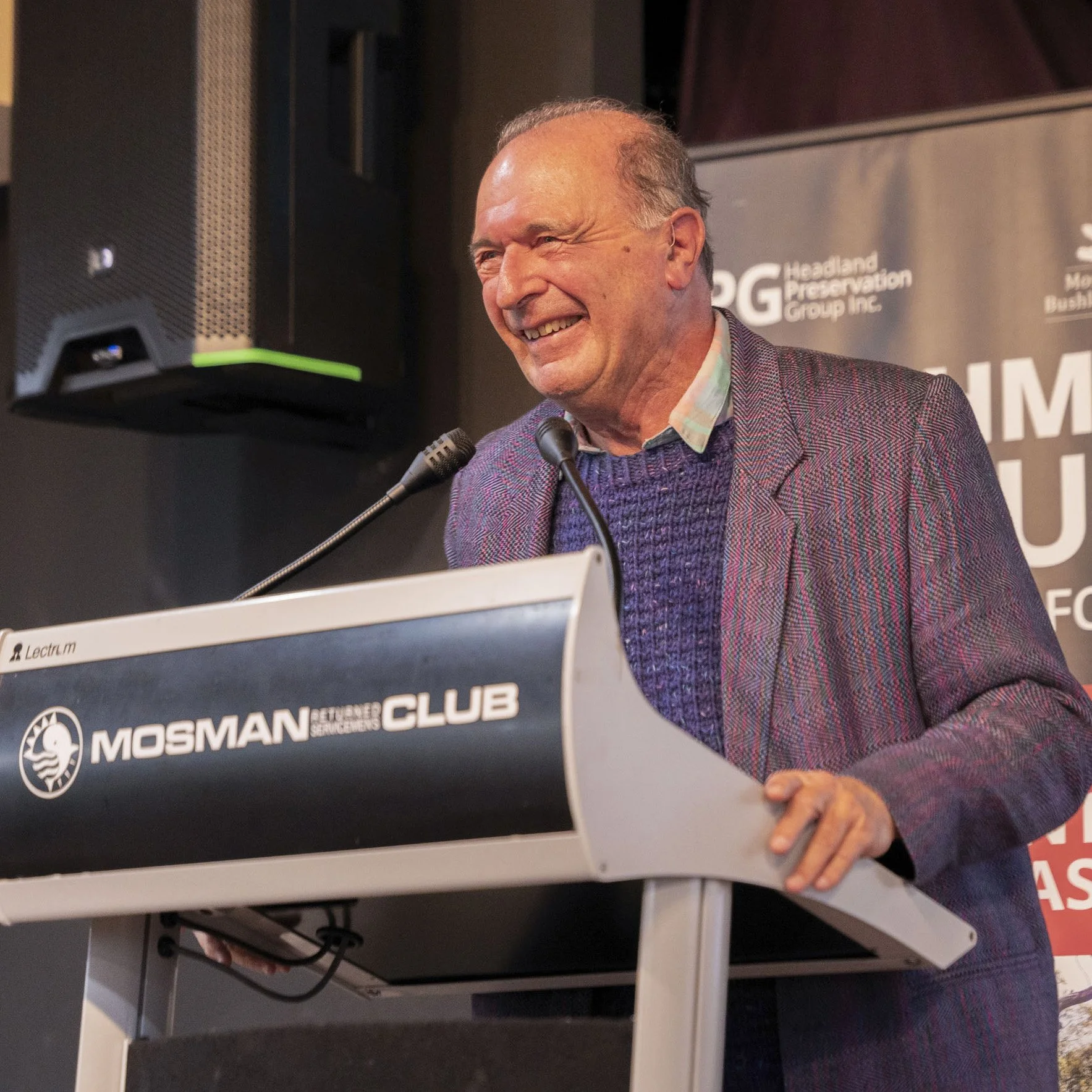
NICK HOLLO, formerly Deputy Executive Director SyDney Harbour Federation Trust
Thank you very much for inviting me to come along today. Before I commence, though, I'd just like to say that I was given a lot more credit than what is due by Tim [meeting Chair] with his very generous comments. I happen to be the lucky person that worked as part of a team that did all of what we did at the Sydney Harbour Federation Trust under the directorship of Geoff Bailey and our board and of course, Bob Clark, who appeared in the video here before, who was also an incredibly important part of that team and many, many others.
I just happened to be the lucky person who came along and was occasionally the front person, but it really was an incredible team effort. It was probably the best job I ever had. And it was also in part because we made all the ducks line up, we had the support and we had great communication between ourselves and the community.
And that's a vital part to being able to achieve any project successfully, which is to be able to work hand in hand with the people who are the community, who are part of what that area is all about. Now, what I'd like to talk about is another aspect of this, but it relates to everything else that people have been saying already.
I would love to see this land become public, but of course it does hinge very much upon whether or not it is indeed surplus to defence requirements or not. But if it were to be public, then I'd just like to, with you, explore some of the aspects of that and what makes that so important.
Why is it so important that land around the harbour should be so public? We all say the harbour is so beautiful, but why is it so beautiful? Why is it so special? And I'd just like to put forward a few thoughts in that regard. Can we have that picture that we started with, that aerial that showed the whole of the headland and the city in the background?
I might have to paint. I might have to paint word pictures if we can't find them. Of course. Probably I should start, otherwise the evening's getting too long. But Sydney Harbour, yay. Fantastic. Thank you. I mean, we all love Sydney Harbour. And what is one of the things that's so fantastic about it is that as a result of it being this flooded river valley, it has created this extraordinary array of points, headlands and bays that wind up and down from the coastline to the inland.
And as a result of that, you get a whole series of spaces that seem entirely different from each other. It's almost as if it's like a Chinese garden on a very large scale, where Chinese gardens have that quality. If any of you have had the privilege to go and visit one, there is one in Sydney which is particularly beautiful in Darling Harbour, where what they do is they actually make you walk around and travel around in such a way that with each turn you experience a very different kind of space, a very different kind of nature.
It makes your mind travel to somewhere where, where otherwise it couldn't go. And in a big city, that's incredibly important. When you walk around these headlands, each point you pass, you go on the other side. Suddenly the breeze is different, the bay looks different, the bush is different, the rocks are different, you have a different aspect.
The prospect of what you see of the rest of the harbour is also vastly different as you move around it. There's no other harbour like that in the world. You can't take in Sydney Harbour with one look. And that's why the battle for Sydney Harbour has been so important. Well, well beyond what we're talking about now recently with, you know, the creation of the Harbour Trust back in the 1990s and early 2000s, back in the 1870s, when the struggle first started, when Cremorne Point was made public, then consequently later on, Nielsen park, named after Niels Rasmussen Nielsen, a minister in the Holman government of the state government at the time. Park Hill. If you ever wonder why Park Hill is called the Gate name and North Head, I always thought it was because it was a park on a hill. Well, no, it was named after Archdale Park Hill, who was also a strong advocate in that circle of people who fought tooth and nail to have public land.
And they made North Head public back in the early 20th century. So the fight for Sydney Harbour and the fight for land has always been present in our modern society and it must continue. And it must continue because of these special qualities and because, just like what the government is doing now, the other forces simply try and shape it to suit the market.
That's how they see the harbour. It's simply something of market value. It's the view. It's your own privilege of being able to have some access to, but in fact it should belong to all of us. And gradually, gradually, the community is not only in opposing previous attempts to sell it off or supporting ventures to be able to get some of it back, but the community has also worked to be able to create an incredible network of pathways that link that harbour up completely.
And that walkway all around the harbour from, and all around the coast, has become incredibly important. And that's why this land, which is part of that, is so important to all Sydneysiders and all Australians, because it's a walk that we can all enjoy, and it's where we can get that extraordinary sense of relief and comfort and spiritual nourishment from the way in which that harbour varies all around us as we walk along it.
Now, it was said already that HMAS Penguin is an integral part of this headland, and it definitely is, because as that headland winds its way down, winds its way down, I talk with my hands. It's very unfortunate. As the headland turns this way and that as it winds down towards the main point, you gradually, gradually have revealed in front of you the fantastic view both to the outer ocean above South Head and above the southern shores, the main arm of the harbour, North Harbour, and of course, Middle Harbour.
There's no other part of the harbour where you get these changing views into the three waterways. Now, a lot of this is actually occluded by the way in which HMAS Penguin is. Now we talk about the importance of the Angophora forest. Well, the Angophora forest also exists on the other side of the road.
That's already in [Harbour] Trust land, but because of that fence, you don't really notice it that much, that the two actually belong together. Imagine with the fences gone, with the whole bush and the landscape melded together, and imagine how the pathways that could become not just a sinuous coastal track, but start weaving their way through in all sorts of different locations, from different parts of the rock ledges, from one side of the road to the other.
As it weaves its way down the hill, you'd actually get a far fuller appreciation of what the significance of this headland is. Now, even from a defensive point of view, Middle Head was important for that as well. I don't know if you realise, but some of those defences were actually designed to fortify against anything coming from within the harbour, from within Middle Harbour.
There's that defensive moat surrounding the fortifications out at Middlehead proper. Well, a lot of that actually faces in towards Middle Harbour. So indeed, that prospect, that importance to be able to view the surroundings and be able to have surveillance over it for defensive purposes becomes our pleasure as citizens, to be able to enjoy, as we walk around and enjoy it from many different vantage points.
Now, mention was made of the Bondi to Manly Walk, and indeed that has become one of the great iconic walks, not just for Australia and for Sydney, but indeed internationally. The Bondi to Manly Ultra has put that on the map as this extraordinary event that happens once a year, where some people who I think are probably a bit crazy, do it all in one go.
But most people do it in bits like I do. And one of the things that we can create in Sydney by virtue of having this extraordinary walk that's accessible to all, is to be able to have places where we can stay along the way. An HMAS Penguin, Middle Head, and particularly HMAS Penguin, because of the quality of its buildings, is ideally suited to be one of the pausing points, because if you do a day walk and you set off from Manly, or if you set off from the city in one day, you get to where you get to Middle Head, and then the next day you'd be able to continue.
So if we're able to develop this idea of being able to furnish our coastal walks by having accommodation along the way, having a lot more places of refreshment, of rest, of other support, you know, places where people can play, gather as a community or, play all sorts of games or have meals or have celebrations, then you'd actually furnish this walk with something that we all seek and many of you have probably gone overseas to do in places like the Camino.
We have that all in our own backyard. There's no other city in the world where you can have the holiday, your own holiday, in your own city, not take a car anywhere and just go for, whether it be a weekend, three days or two weeks. And that's what we are missing in being able to link up all these walks.
And I'd argue that Middle Head is an important part of that, because there's also no other part of the harbour where the walk could be, not just a sinuous edge to the foreshore like it is in most parts of along the coast, going from Bondi up the coast or along the harbour back towards the city, or indeed on the eastern side of the harbour where I come from.
But there are places like HMAS Penguin where you could create a variety of parts so that each time you go, you go to a different part altogether and experience totally different fantastic experiences of views, vistas, places where you can relax and enjoy nature, enjoy the, you know, the habitat that is preserved there.
So it's very, very important for these other reasons as well. And why is the heritage important? You know, we talked about. I talked a little bit about why the harbour is important because we, we all just say it is, and we all say, well, heritage is important. Well, aside from the fact that it gives us this link to history, which is vital so that we understand where we came from and where we are going, the other reason why this sort of heritage is so important is that it gives us the kind of spaces and buildings that our city otherwise does not have.
If you look at this pattern of our city, most of it is streets with street fronting buildings, either suburban or shopping strips or shopping malls. Where are our squares, where are our plazas? Where are places where on a smaller scale or a larger scale we can gather? Sydney doesn't actually have a town square anywhere, but we ought to have a myriad of them.
It is actually. And what we found also in dealing with the defence sites, you know, the other defence sites at the Harbour Trust, is it's the defence sites that give us these places where people can meet in a civic environment. It's what we seek and we desire whenever we go overseas. Because that's what other old cities have, that's what heritage gives and that's what the heritage of these buildings give, as well as their storeys, as well as their importance for what function they have.
They're the ones that give us spaces that we otherwise don't have. If you have a look at the spaces between some of those buildings up there, they're not just linear, you know, they create little squares, they create little pockets. You can imagine you could play ball in one, you could play chess in another.
One might have a corner cafe, one might have the accommodation to do with the people who are the walkers or elsewhere. So there is endless opportunities that otherwise we don't have that will just enrich our city. And it would enrich it not only spiritually, culturally, but it would also enrich it economically, because that is an extraordinary economic benefit to have to be able to enjoy and be a tourist in your own city.
Now, people have talked about where should this land go if it was to be divested and not because of my former work at the Harbour Trust. I no longer work there. So I'm not saying this for any personal benefit, but they are the logical place where this sort of work would happen because they are the organisation that was set up to be able to manage both cultural heritage, natural heritage, consult with the community, develop plans to be able to work out in a business like fashion, how to reuse them in a way that is for common community benefit as well as to be able to get some income.
The buildings on this site, to me, superficially, because I don't know it well enough, look to be in much, much better condition and are much, much more substantial than any of the other ones we ever worked on at the Sydney Harbour Federation Trust. And that funding for that venture should not be an impediment to considering that, because you don't have to do.
The advantage of having things kept public is that, unlike when it's handed over to the private sector and to investors, you don't have to do everything at once. Developers always need to do everything quickly because, well, they're working with loans or with other people's money or other money that they need to kind of, you know, quickly make, you know, invest and make, you know, something from that they can get their money back.
The government doesn't have that sort of requirement, that kind of constraint. One could do it gradually and slowly. And that's also a much, much better way to do it. Start up by opening up the site. It's probably good enough as it is for people to be able to wander through it and explore it and become familiar with it, because we all know it from the outside.
Some of us who are lucky enough to have been service people there might know it better, but all of us, we're only just looking in from the outside. We don't really know what's there. So give us all a chance, let us walk through it, and then let's start working with a network of spaces.
How we can link them all up, make them part of the overall public fabric of our society, and then work out what best uses relate to those along the way. Now, yes, of course, even that initial work requires some funding, but consider that the government wanting to dispose of it will also require that kind of initial investigation, because they're going to need to know what their sellers.
They're going to need to know what condition it is in and what other constraints it might have. So that sort of work has to happen anyway. It has to happen whether they sell it or whether they keep it. So that basic initial introductory amount of funding to establish where we're at could be used for that public benefit of just opening up the site and slowly working out what we want to do with it.
So lack of funding should not be an impediment to this being handed over to a government agency that's got the capability to be able to do this sort of job.